
Cleveland Metroparks is home to three major river systems (Rocky River, Cuyahoga River, Chagrin River) and several direct Lake Erie tributaries that form the backbones of its reservations. Draining to these major rivers are over one thousand primary headwaters. Streams and rivers are closely tied to the health of the land around them and our actions can negatively affect them. The Park District waterways are impacted by uphill unprotected landscapes ranging from the urban core to rural outskirts.
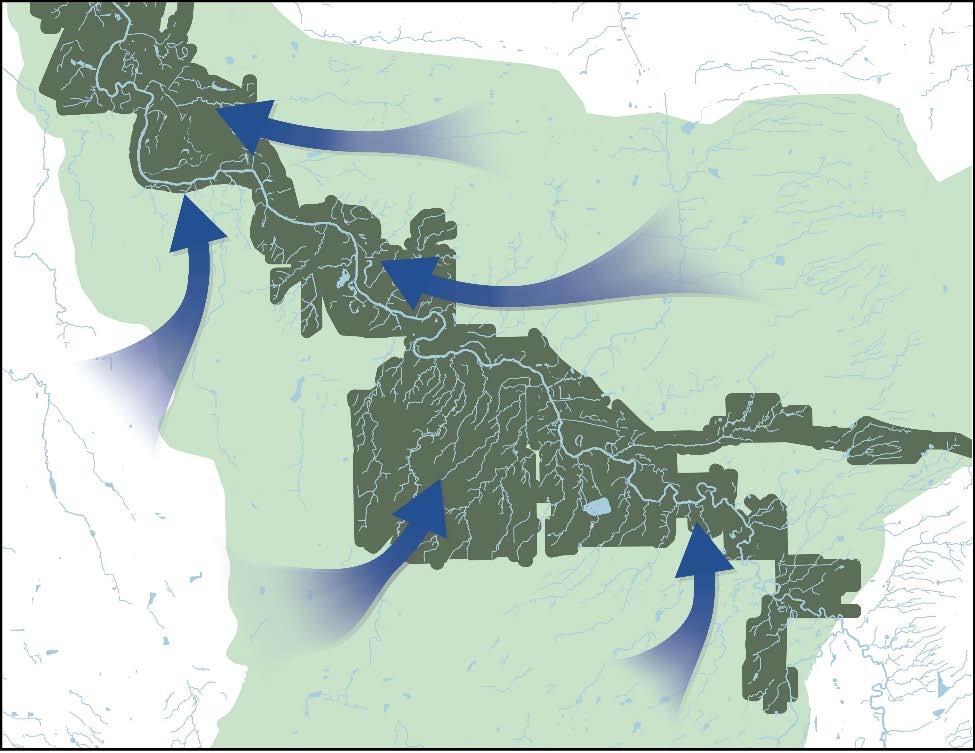 A graphic representation of Mill Stream Run and the waterway centric landscape of the Park District. Light blue lines show the many streams flowing throughout Mill Stream Run. Dark green represents Park District land and light green represents the surrounding uphill landscapes
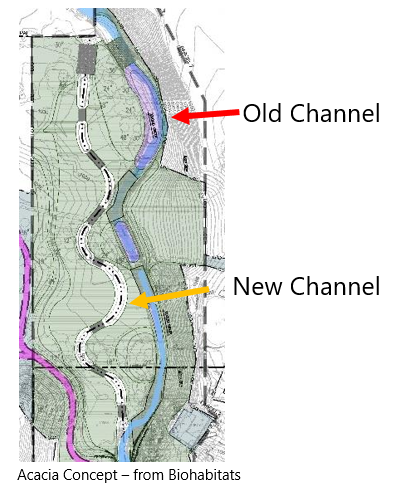 Sometimes restoring streams means building new channels like at Acacia along the main stem of Euclid Creek
While Cleveland Metroparks manages several very high-quality streams, many more are impacted by direct or upstream disturbance like increased stormwater from impervious surfaces, channelization of streams, undersized culverts and bridges, etc. These degraded streams provide opportunities for stream restoration projects to return more natural or historic functions to these important systems.
Stream and River Management
Cleveland Metroparks manages rivers and streams to improve habitat, reduce erosion, and increase floodplain connection. Efforts to restore streams and rivers range from large scale stream restoration projects like dam removals to small scale solutions like installing plants to stabilize stream banks along a trail.
Stream restoration projects can address eroded streams with deep channels by building the stream back up so that the water in the channel overflows the stream banks onto the floodplain during storm events. This approach allows the floodplain to trap sediment and pollutants, store and filter water, and provide breeding habitat for amphibians and other wildlife. You can see this restoration approach at our Garfield Park Reservation as you walk along Wolf Creek upstream of Garfield Pond.
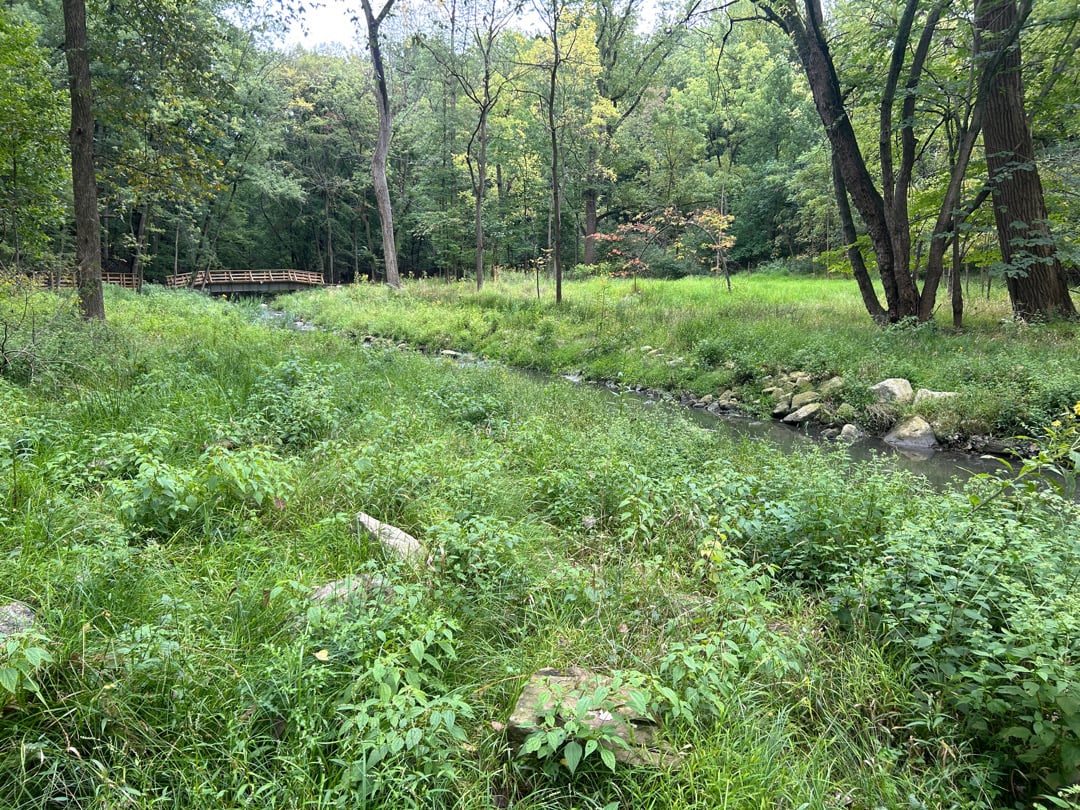 Wolf Creek Stream Restoration and Floodplain Connection
Alternatively stream restoration can create a new floodplain by excavating alongside the existing stream elevation. You can see this restoration approach at Bonnie Park along the East Branch Rocky River or at Acacia Reservation along Euclid Creek.
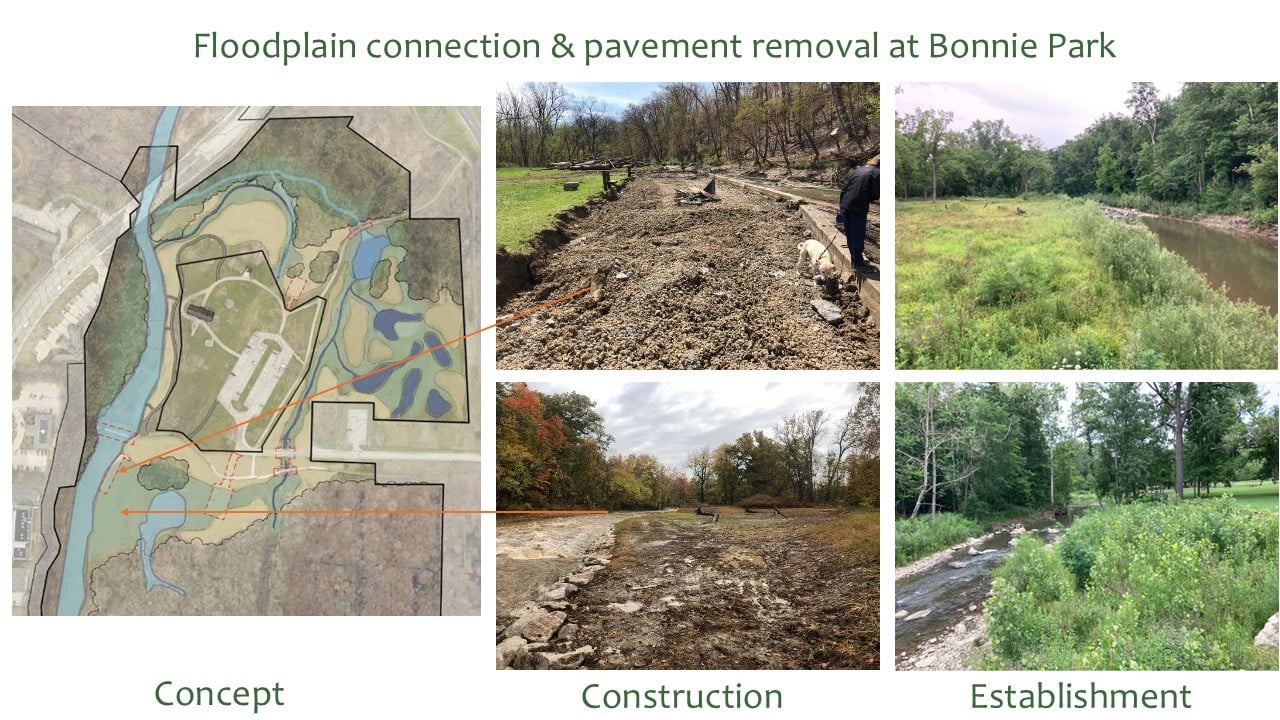 Bonnie Park Floodplain Expansion
Stream restoration can also add meanders or bends to artificially straightened streams, stabilize eroding banks, and add pools, rocks, and large woody debris to increase habitat diversity within the channel.
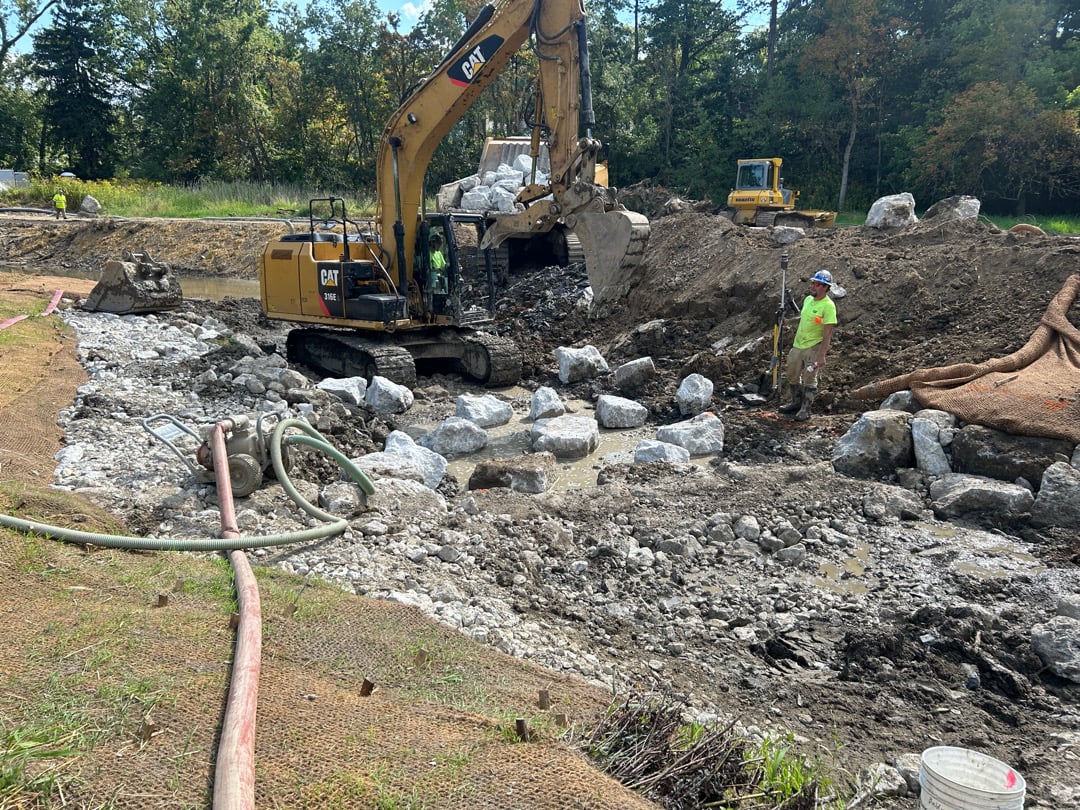 Adding stone to create riffle habitat after dam removal Adding stone to create riffle habitat after dam removal | 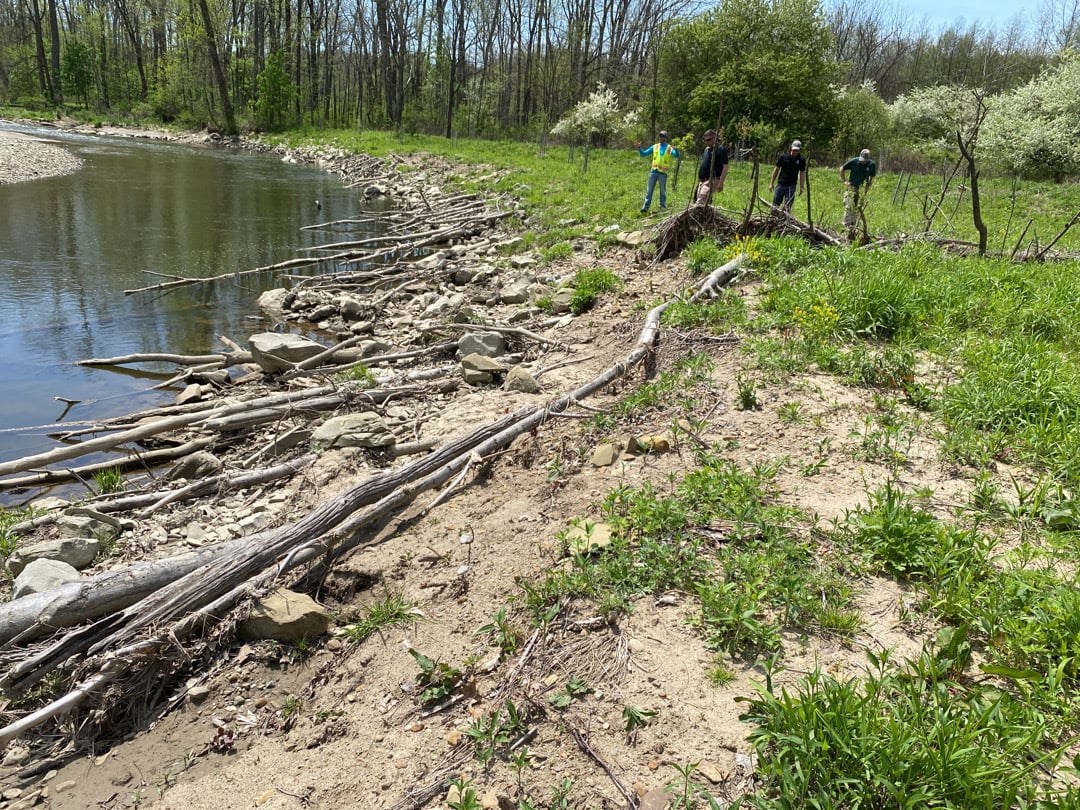 Using large wood in bank stabilization to create habitat Using large wood in bank stabilization to create habitat | 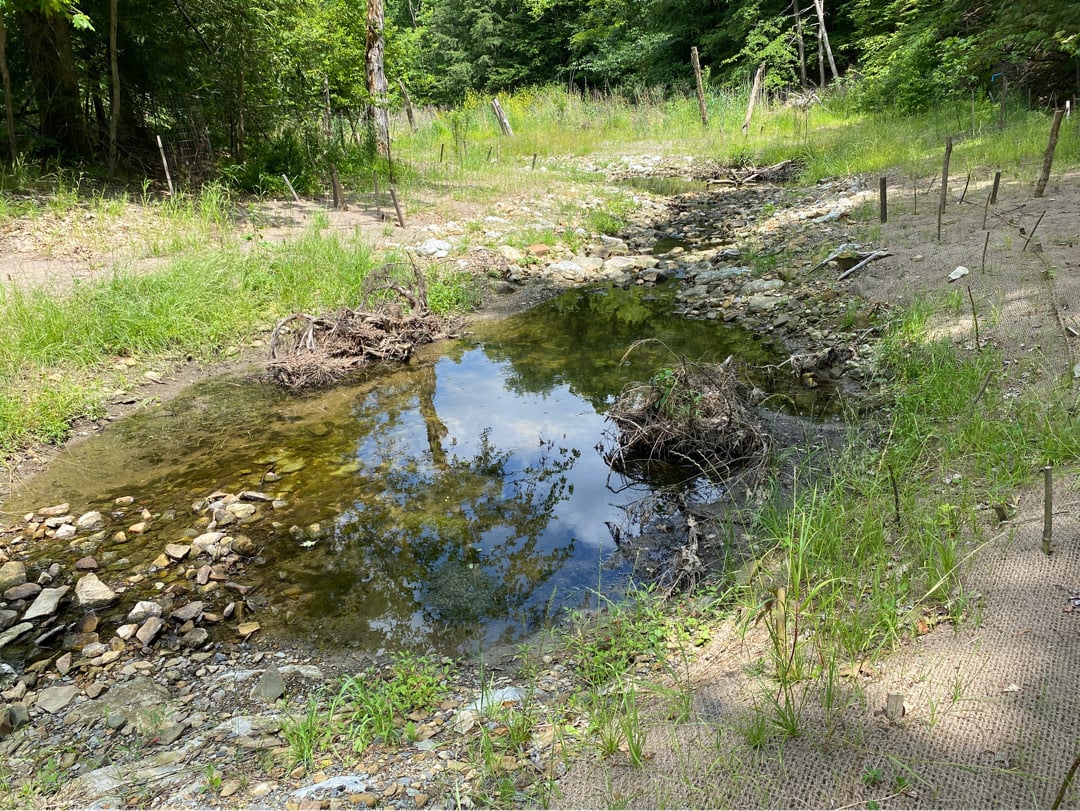 Constructed pool with woody habitat Constructed pool with woody habitat |
-
Cleveland Metroparks strives to understand the drivers for stream impact to create realistic goals and objectives for restoration projects. One tool to help assess restoration potential is the Stream Function Pyramid. The Stream Function Pyramid provides a hierarchy for streams. Functions at the top of the pyramid like healthy aquatic wildlife (biology) are supported by functions at the bottom of the pyramid (hydrology).
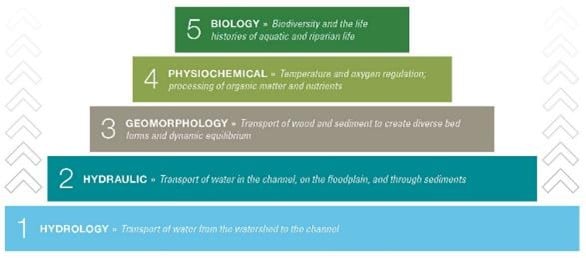
Stream Function Pyramid Graphic - source: StreamMechanics, Harman et. al., 2012
Hydrology, hydraulics, and geomorphology functions are needed before successfully restoring chemical and biological functions to a stream. Cleveland Metroparks and consulting partners assess degraded streams to determine which functions are currently impaired to assist with setting reasonable goals and objectives to find the best restoration approach.
One example is the recent Baldwin Creek Dam Removal Project – by removing 3 buildings and associated hard surfaces, a dam, excavating the floodplain and adding riffles and pools, the project helped return more naturalized hydrology, hydraulics, and geomorphology to the creek – setting the stage for diverse fish populations to return.
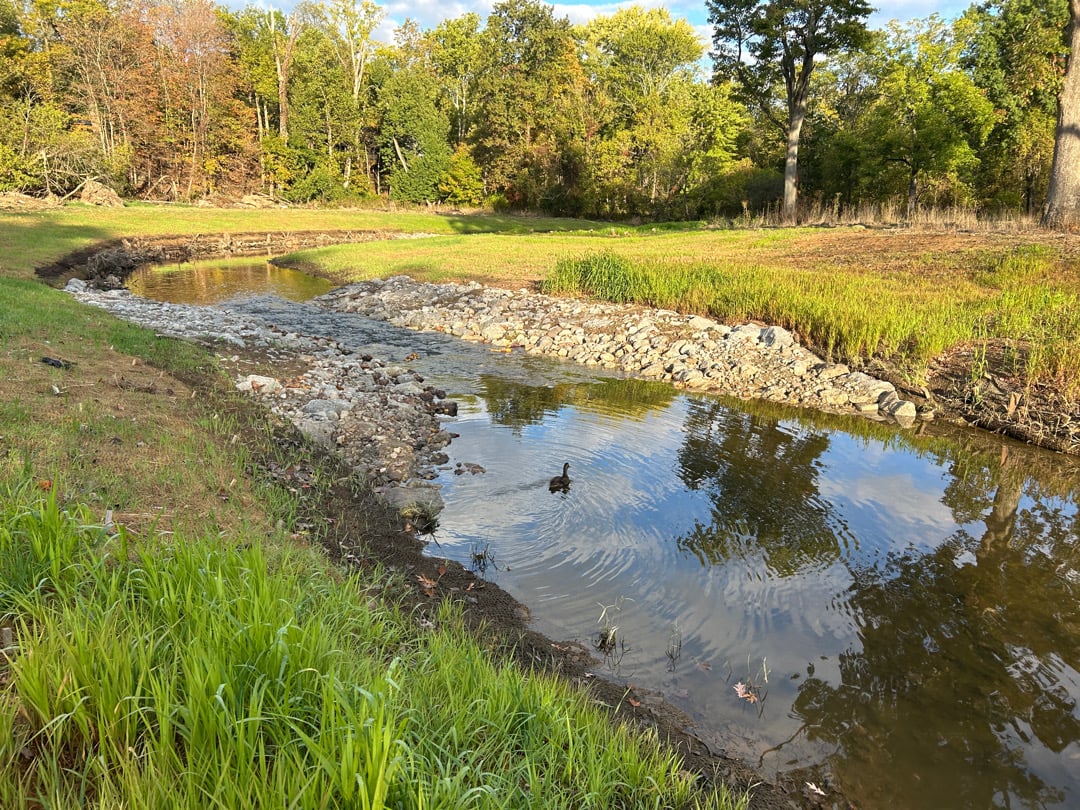 Baldwin Creek Dam Removal Photo from two weeks after restoration construction completed
 -
Cleveland Metroparks collaborates with consultants and contractors to install large scale stream restoration projects as appropriate or as needed. This process involves planning, concept creation, cost estimating, grant writing to help fund restoration, design contracts to determine the ideal restoration approach, and contracts with a construction team to build the project. Cleveland Metroparks has worked with a variety of consultants and contractors to restore several important river reaches. These projects include dam removals for fish passage, bank stabilization to prevent loss of infrastructure, and floodplain restoration to help capture and slow down increased flows and pollution from stormwater.
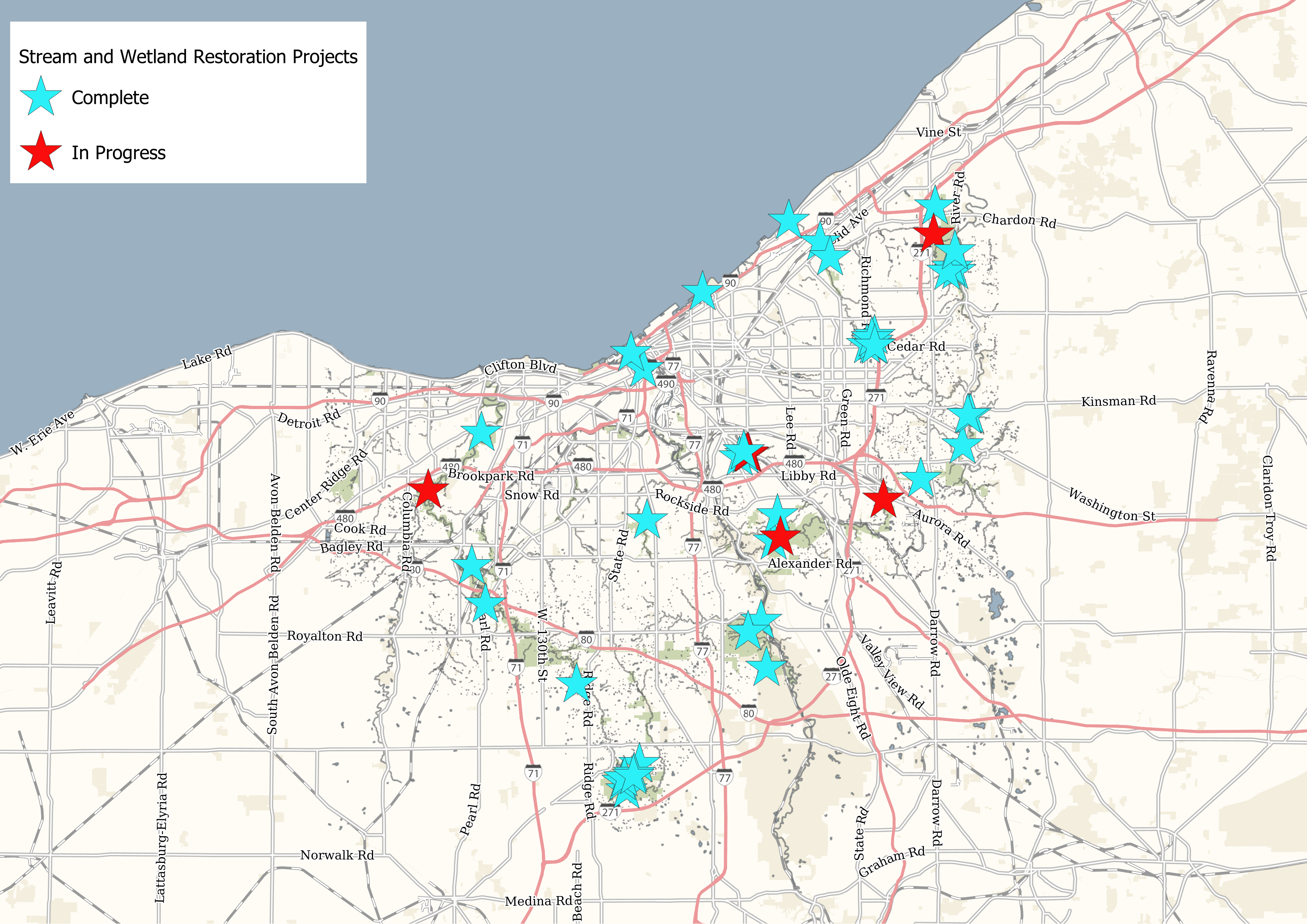
January 2026 Stream & Wetland Restoration Project Map
Example Large Scale Restoration Projects:
- Baldwin Creek Dam Removal
- Beecher’s Brook Restoration
- Bonnie Park Dam Removal
- Chagrin River at Jackson Field
- Foster’s Run Restoration
- Mill Creek Daylighting
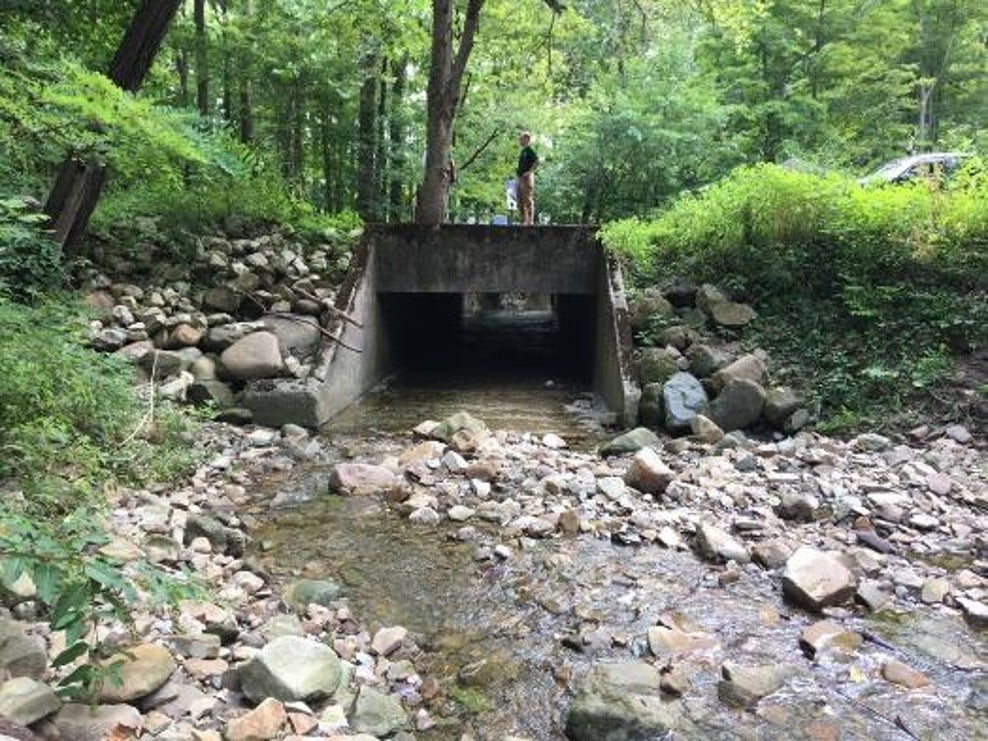
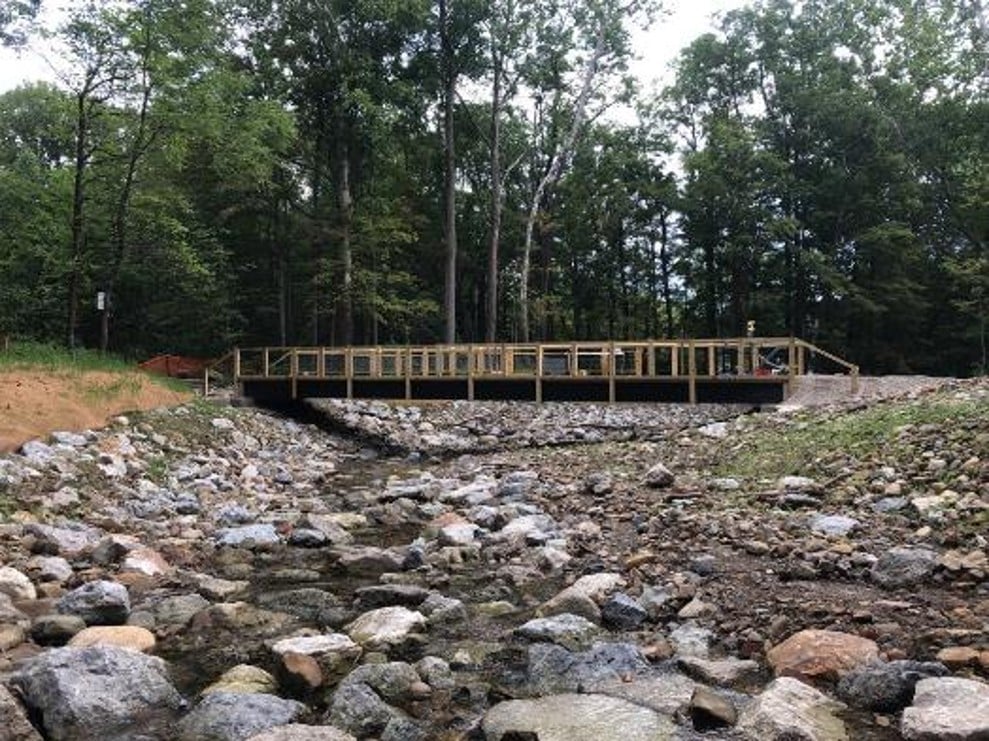
Left: Beecher's Brook before restoration. Right: Beecher's Brook after restoration.
-
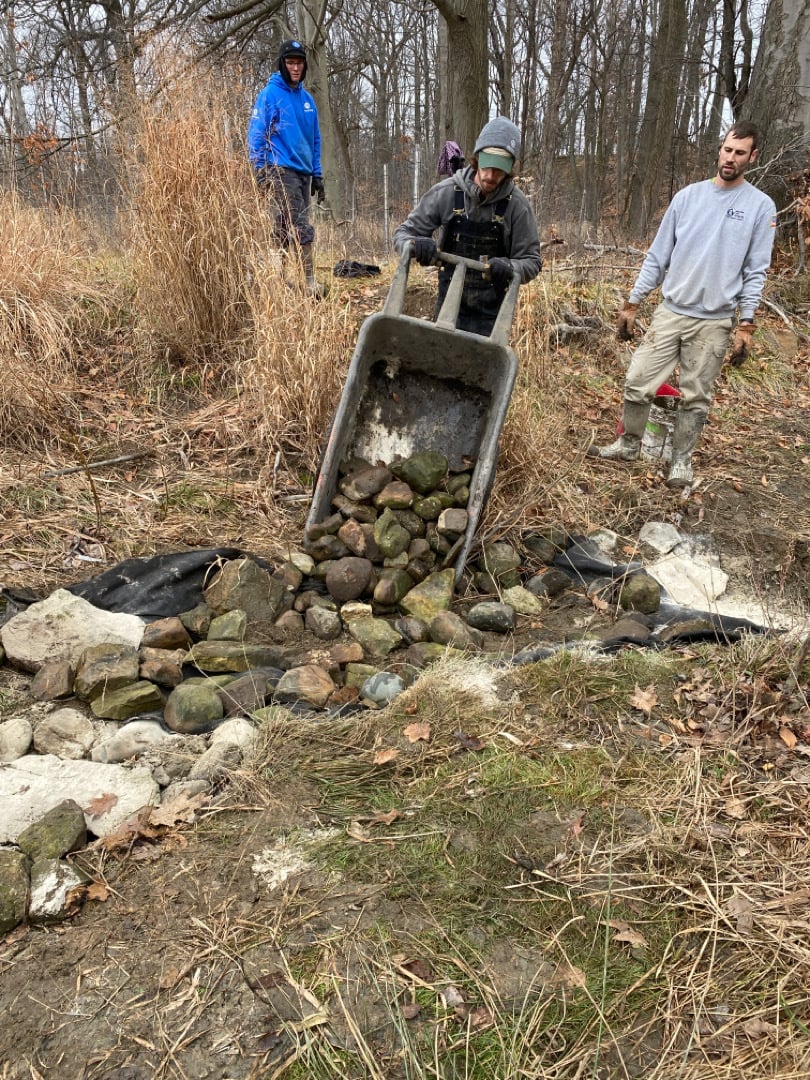
Cleveland Metroparks utilizes staff and volunteers to perform small scale stream restoration projects that do not need heavy equipment and experienced operators. The projects often involve planting seeds, plugs, shrubs, trees, and live stakes to address erosion. Projects also include hand placement of stone, large woody debris, and vegetation to stop erosion, create habitat, and recharge groundwater. Additionally, Cleveland Metroparks continues to manage invasive plants in stream’s riparian corridors.
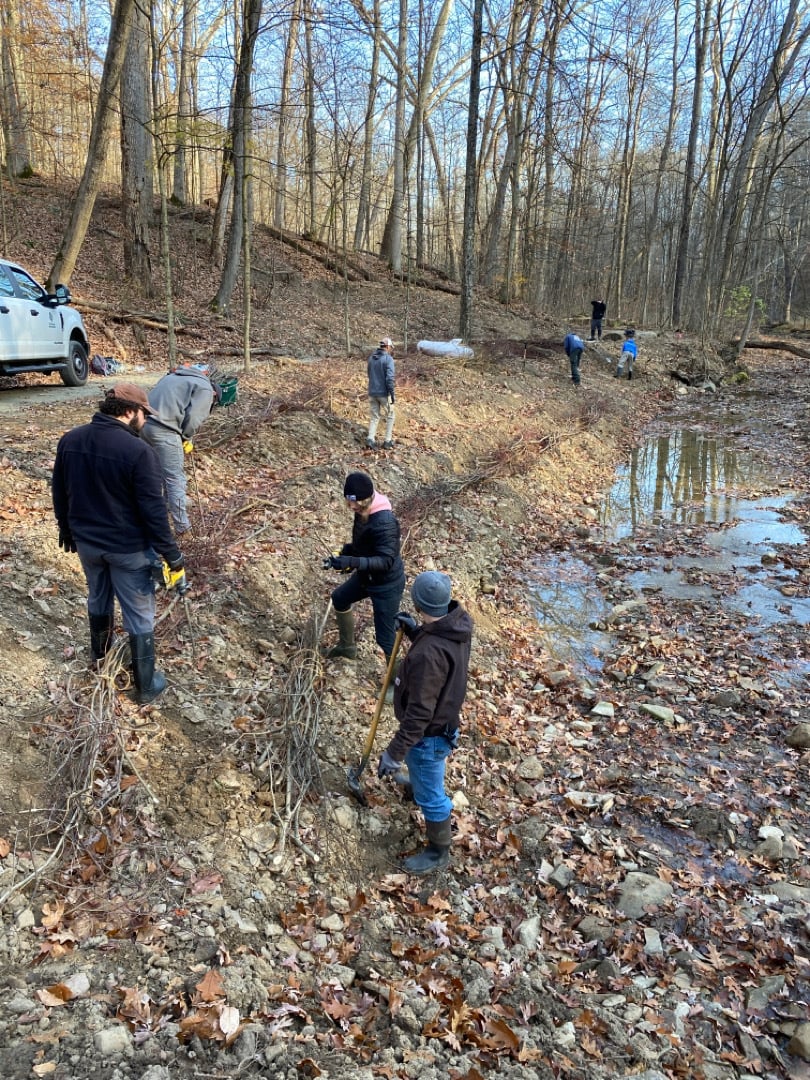
Left: Natural Resources staff and Watershed Volunteers install live stakes and fascines along an eroding bank to provide long term stabilization
Right: Natural Resources Staff and Contractors work to address a headcut by hand
-
Cleveland Metroparks tracks restoration projects over time to determine maintenance needs, evaluate improvements and tell success stories. Cleveland Metroparks utilizes community members to help with project photo documentation. You can follow several projects as they change over time at the Cleveland Metroparks chronolog page. Next time you see a chronolog station, snap a photo and contribute.
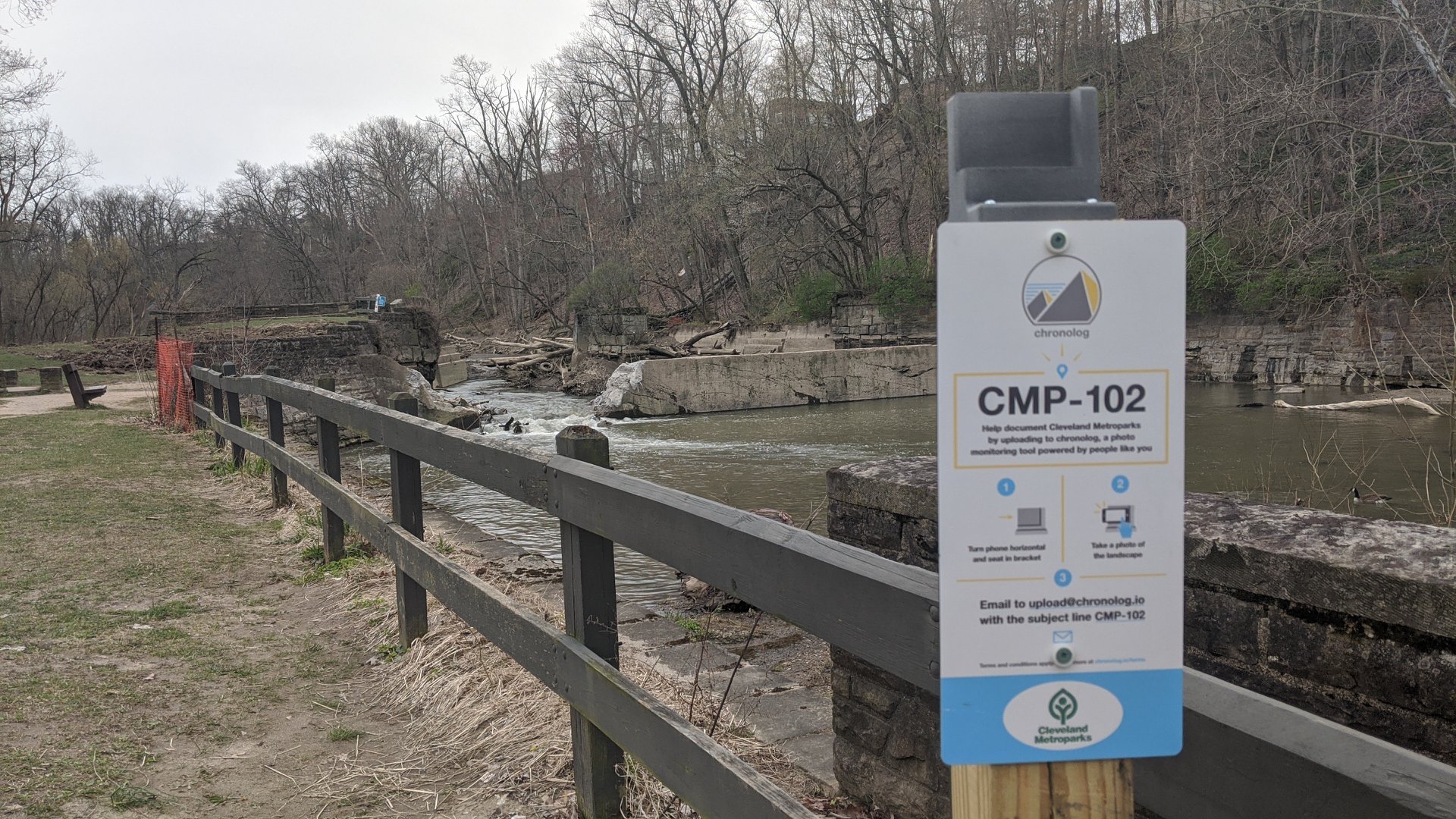
Bonnie Park Dam Removal Chronolog
Cleveland Metroparks Watershed Volunteer Program also provides stewards the opportunity to engage in learning about, monitoring and restoring streams. Join an upcoming public event to learn more.
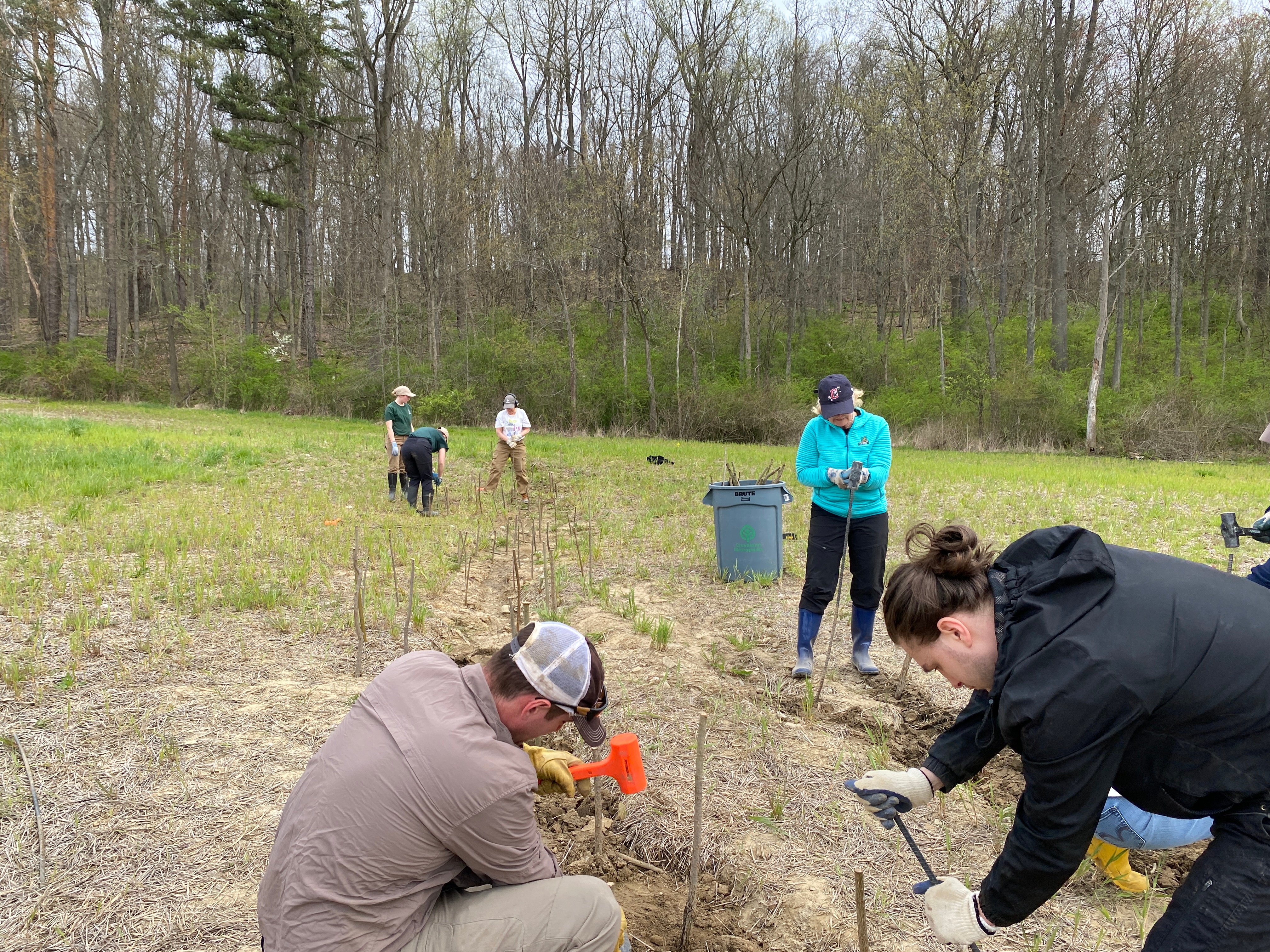 Watershed Volunteers and Natural Resources staff installing live stakes to address erosion